
-
Products
- Applications
- Support
- Business
- About Us
Global - English

BUENOS AIRES, Argentina — The Pampas of Buenos Aires Province are among the most productive farmlands on earth — Argentina ranks as the world's third-largest soybean exporter and second-largest corn exporter. But high national output doesn't solve a problem that plays out farm by farm: getting the right equipment to the right field at the right time.
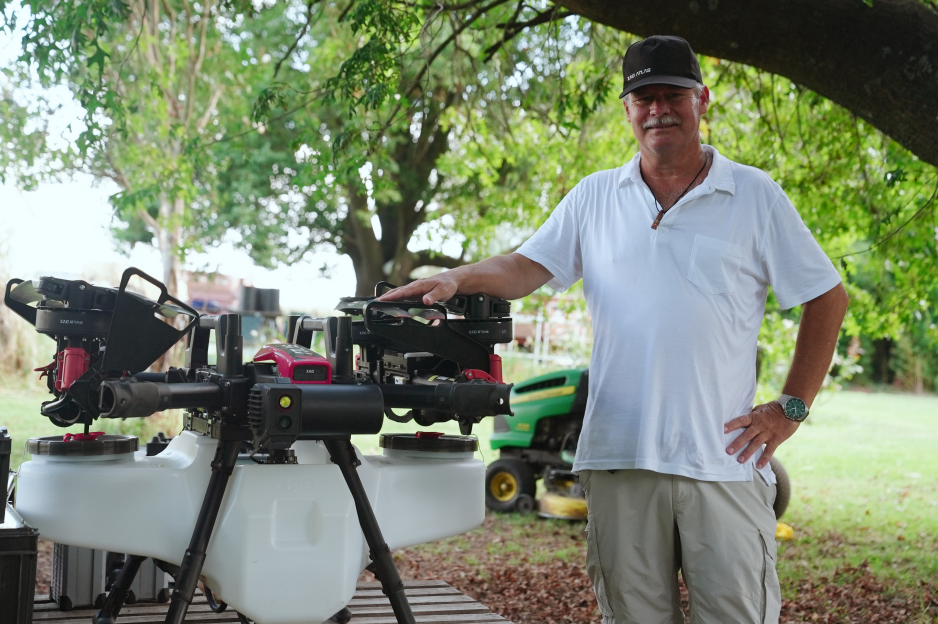
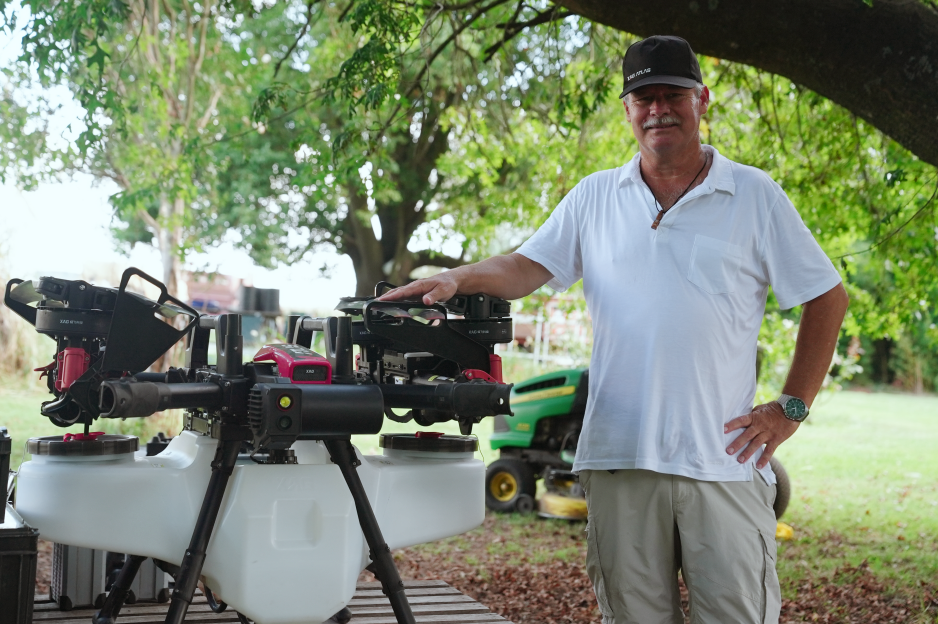
Tomás Zavalía knows this well. A 57-year-old agronomic engineer based in 25 de Mayo, he manages a 450-hectare family farm and advises two larger operations — one of 4,500 hectares, another of 2,500 hectares. In September 2025, he adopted the XAG P150 agricultural drone to address a recurring challenge: during peak season, large ground sprayers across the Pampas are fully booked, leaving mid-sized farms waiting for equipment at the moments they can least afford to wait.
A Season Full of Pressure
The stakes are high. Argentina's 2022–23 La Niña drought caused an estimated USD 20 billion in agricultural damage. Recovery came, but so did new extremes — parts of Buenos Aires Province received more than 1,600 millimeters of rainfall in 2025 alone, nearly double the annual average. Input costs have risen steadily, and margins on rented land, which accounts for over 75 percent of Argentina's soybean production, have tightened considerably.
Cover crop adoption has also grown steadily across the Pampas as farmers work to restore soil health after years of drought stress and intensive cultivation.
Tomás has expanded their use across his own operation in recent seasons, both as a soil-health measure and as a buffer against the yield volatility that has defined the past few growing cycles in Buenos Aires Province. But seeding cover crops efficiently requires the same flexibility that spraying does — targeted, timely, and unconstrained by equipment availability. It is precisely the kind of work that large, booked-out machinery isn't built to serve.
"Timing is important," said Zavalía. "You need to apply herbicides, fungicides, and insecticides on schedule, and do it properly. If you miss the window, it can hurt the final yield."
Precision Where It's Needed
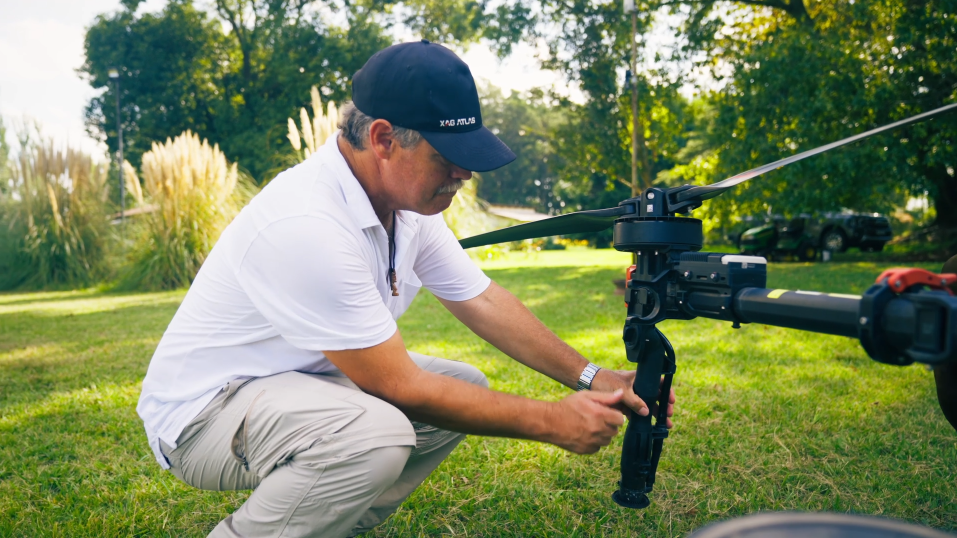
The XAG P150 carries a 70-liter smart liquid tank and generates a strong quad-rotor downdraft that drives spray deep into the crop canopy, ensuring coverage on both sides of the leaf surface. Its RevoSpray system uses centrifugal nozzles to produce finer, more concentrated droplets, allowing Zavalía to apply roughly half the plant protection product per hectare compared to conventional methods, without compromising results.
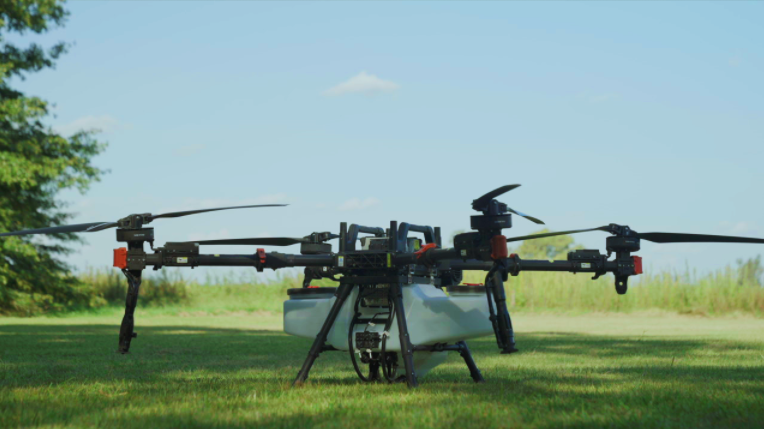
Water consumption has also dropped significantly. Where a conventional ground sprayer requires 80 to 100 liters per hectare, the P150 operates at approximately 15 to 20 liters — around 20 percent of that volume. In a region where input costs are under constant pressure, that efficiency compounds quickly across a season.
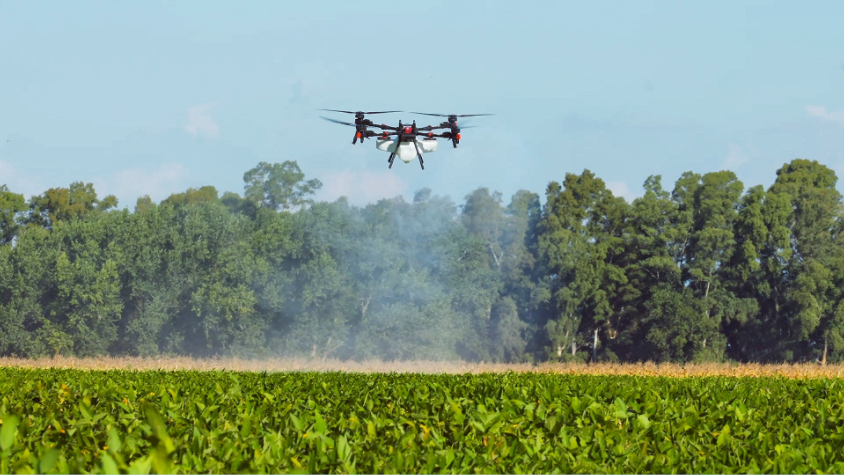
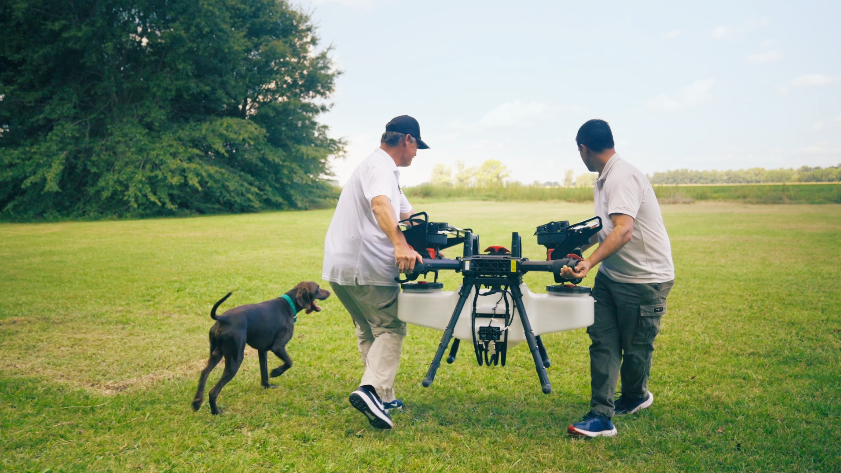
Critically, the drone eliminated the scheduling dependency that had long constrained Zavalía's operations. The P150 requires no advance booking, no road access, and minimal setup time. Its autonomous flight system, managed through the XAG One app, generates optimal routes based on field shape and supports multi-plot operation, automatically transitioning to the next field once a task is complete. Under good conditions, Zavalía covers 13 to 14 hectares per hour on herbicide work, and 18 to 20 hectares per hour for fungicide and insecticide applications.
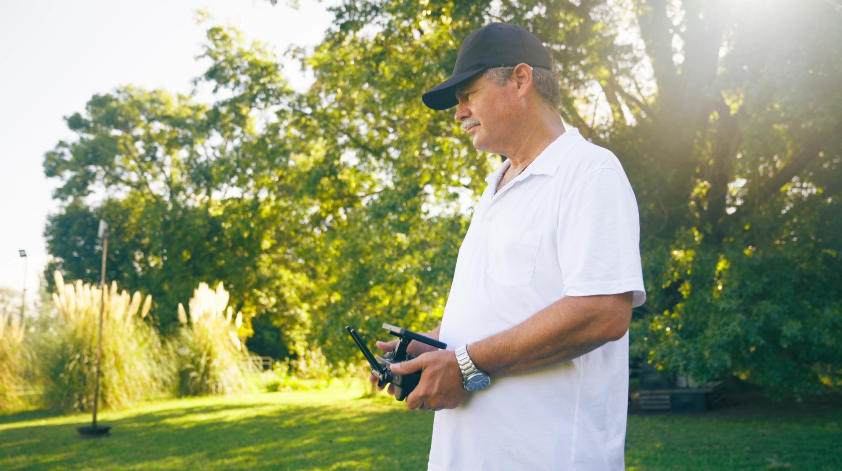
"Quality depends on the operator, the weather, and the equipment," said Zavalía. "When the wind, temperature, and humidity are right, the results are very good."
A Different Way of Working
Zavalía expects to recover the drone's cost within approximately two years. Beyond his own farm, Zavalía now offers spraying services to neighboring operations, effectively turning the drone into a revenue-generating asset between his own application windows.
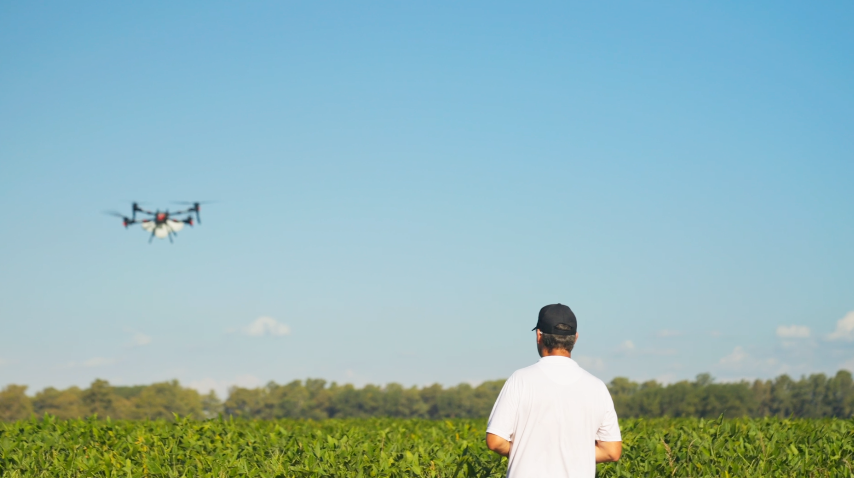
For other mid-sized farmers in the region facing the same scheduling constraints, that kind of on-demand service fills a gap that contracted ground sprayers have long left open. It is a model that, as drone adoption grows across the Pampas, is likely to become increasingly common.
He continues to rely on traditional equipment for planting his main cash crops. But most of his spraying and cover-crop seeding is now handled by the P150, giving him control over the part of the season that was always hardest to plan around.
"This is life," said Zavalía. "Working with nature."
